Show riders exactly when the next bus arrives - at the stop, in the station, and on the vehicle. Peak Transit's Real-Time Passenger Information (RTPI) displays deliver live arrival predictions, route information, and service alerts on LED and LCD signs, powered directly by the same CAD/AVL data running your fixed route operation. One platform. One source of truth. Real-time information riders can actually trust.
Real-Time Passenger Information Displays for
Fixed Route Transit
Trusted by transit agencies nationwide
What is a real-time passenger information display?
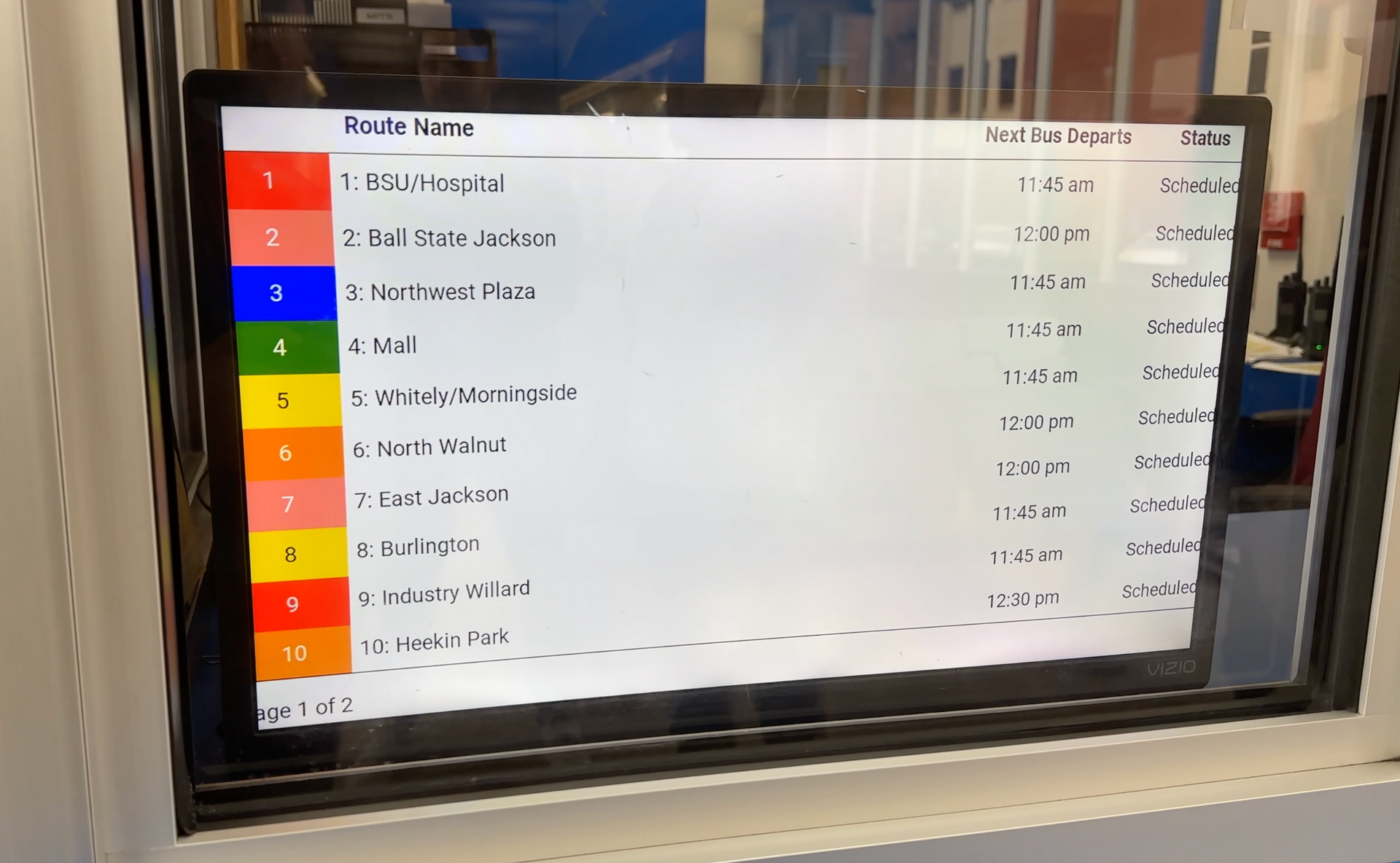
A real-time passenger information display (often called RTPI, RTPIS, or a transit arrival display) is a stop-level, station-level, or on-board sign that shows riders live arrival predictions, route information, and service alerts - generated from a transit agency's CAD/AVL system. Unlike a printed schedule or static sign, an RTPI display updates continuously based on where the buses actually are on the route.
This is not digital advertising or out-of-home media. Peak Transit's RTPI displays exist for one purpose: to show fixed route transit riders accurate, real-time information about their service. The displays are owned and operated by your agency, fed by your CAD/AVL data, and dedicated entirely to passenger information.
The Peak Transit difference
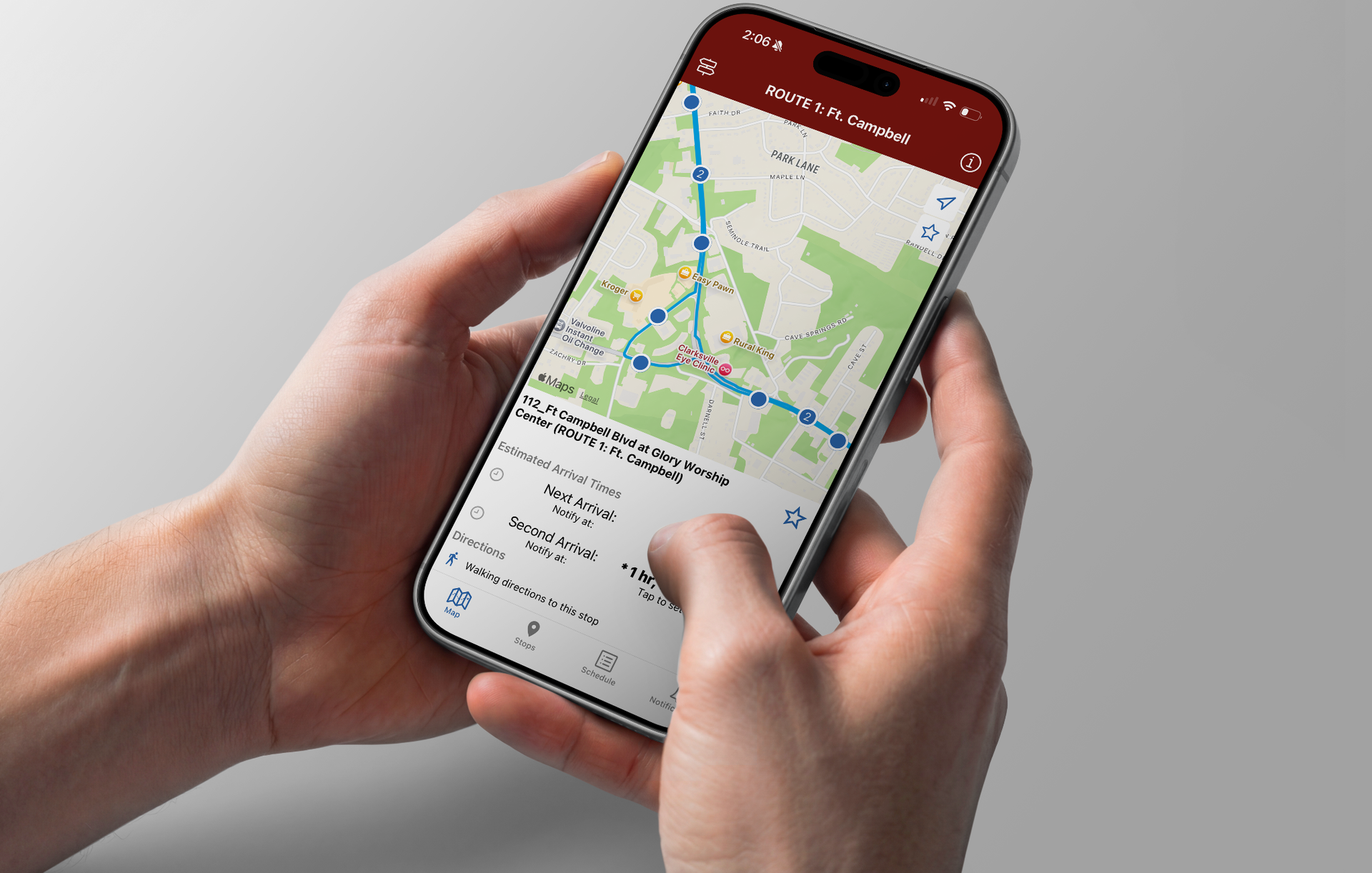
Peak Transit's RTPI displays are part of the same platform powering your CAD/AVL, Mobile Data Terminals, Automatic Voice Announcement System, and branded rider app. The arrival time a rider sees on a sign at the stop matches what they see in the app, hear on the bus, and what your dispatcher sees on screen - because it's all coming from the same engine.
Core Capabilities
What real-time passenger information displays do for your agency
Benefits for your agency
The biggest friction point in fixed route transit is the wait. Riders standing at a stop with no information assume the worst - that they missed the bus, that the service is unreliable, that they should have driven. Real-time arrival displays remove that uncertainty and turn a stressful wait into a known wait, which directly supports ridership growth on covered routes.
Benefits for your AGENCY
- Reduced perception of wait time, even when actual wait is unchanged
- Lower abandonment at stops
- Higher trip frequency from regular riders
- Stronger ridership case for service expansion
- Concrete improvement metric for grant and budget cycles
Cut customer service call volume
When the answer to "where's my bus?" is visible on a sign at the stop, riders stop calling to ask. Stop-level displays - especially in combination with the Peak Transit branded rider app - measurably reduce inbound call volume to dispatch and customer service.
Benefits for your AGENCY
- Fewer "where's the bus?" calls during peak service
- Lower customer service staffing pressure
- Dispatchers freed up for actual service management
- Self-service answers available 24/7 at the stop itself
- Measurable reduction in inbound call metrics
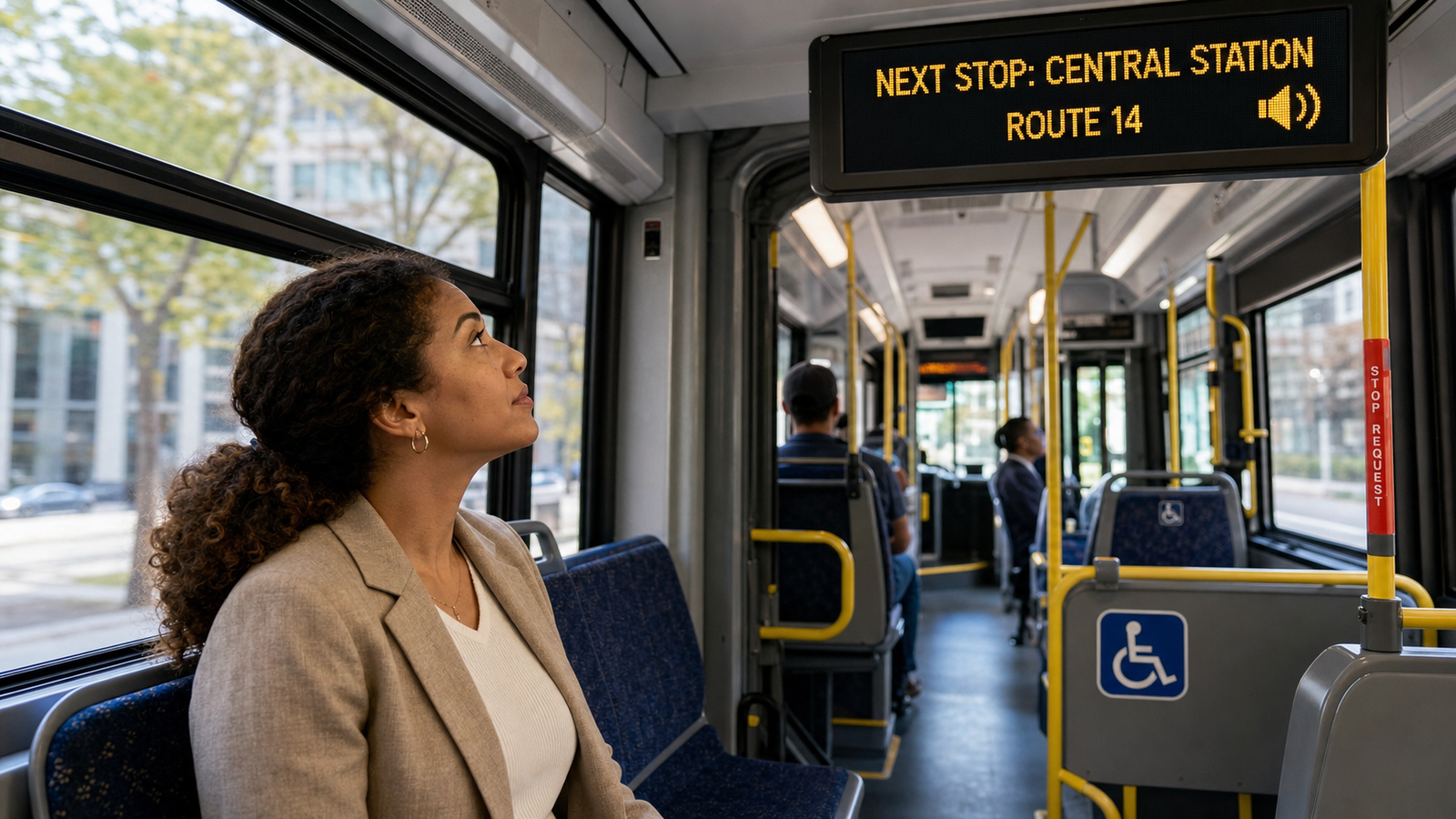
Support ADA visual information requirements
ADA accessibility rules require fixed route transit to provide both audible and visual stop announcements on vehicles equipped with destination signs. Peak Transit's on-board displays - paired with our Automatic Voice Announcement System - deliver synchronized audible and visual information that meets both requirements together.
Benefits for your AGENCY
- Visual stop announcements paired with audible AVAS
- Supports ADA Section 37.167(c) requirements
- Defensible compliance for FTA Triennial Review
- Better access for riders who are deaf or hard of hearing
- Stronger access for visiting riders unfamiliar with the route
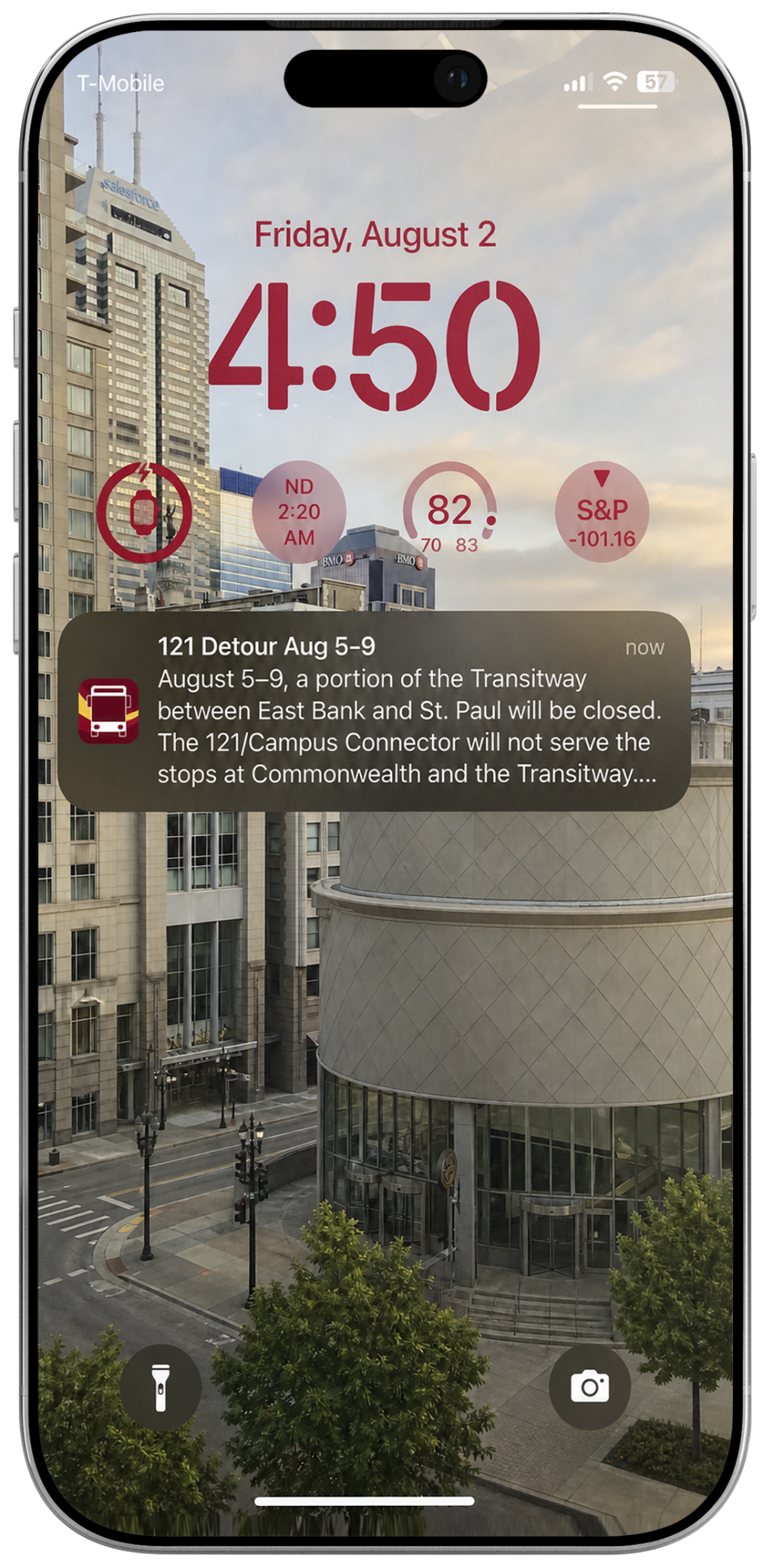
Display service alerts and detour information in real time
When a route detours, a stop closes, or weather affects service, your dispatchers can push alerts directly to the displays - at the stop, in the station, and on the bus. Riders see the change immediately, in context, where they need it.
Benefits for your AGENCY
- Direct line to riders during disruptions
- Alerts targeted by route, stop, location, or system-wide
- Reduces complaints during service changes and weather events
- Improves rider trust in agency communication
- Tied directly to your dispatcher workflow
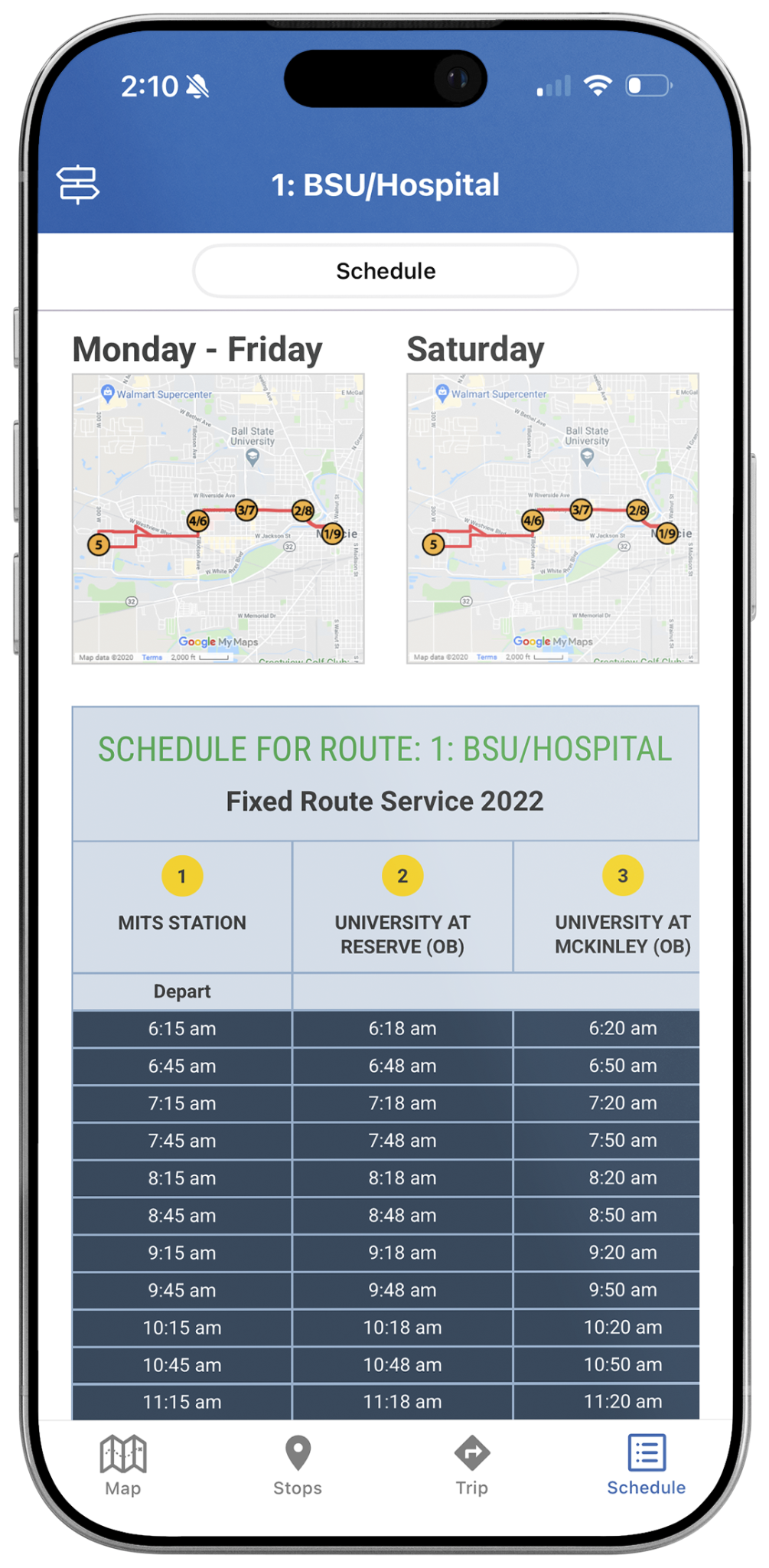
Replace printed schedules and signage maintenance
Printed schedules go out of date the moment service changes. Static signs require physical labor to update. RTPI displays update automatically from your CAD/AVL - including route names, schedules, stop information, and headsigns - eliminating the printed-schedule lifecycle entirely on equipped stops.
Benefits for your AGENCY
- No more printed schedule production and distribution at covered stops
- No physical labor for schedule changes
- Eliminates outdated printed information at the stop
- Service changes propagate instantly
- Lower long-term cost of stop-level rider information
Strengthen public perception and brand visibility
A stop with a working, accurate real-time display tells the public your agency is modern, reliable, and worth riding. RTPI is one of the most visible signals of agency quality to riders, voters, council members, and funding authorities - particularly at flagship stops, transit centers, and high-visibility corridors.
Benefits for your AGENCY
- Visible signal of agency modernization to public and funders
- Anchor amenity at flagship stops and transit centers
- Supports council, board, and budget presentations
- Stronger brand presence at high-visibility locations
- Concrete proof of investment in rider experience

Industries we serve
RTPI configurations tailored to your fixed route environment
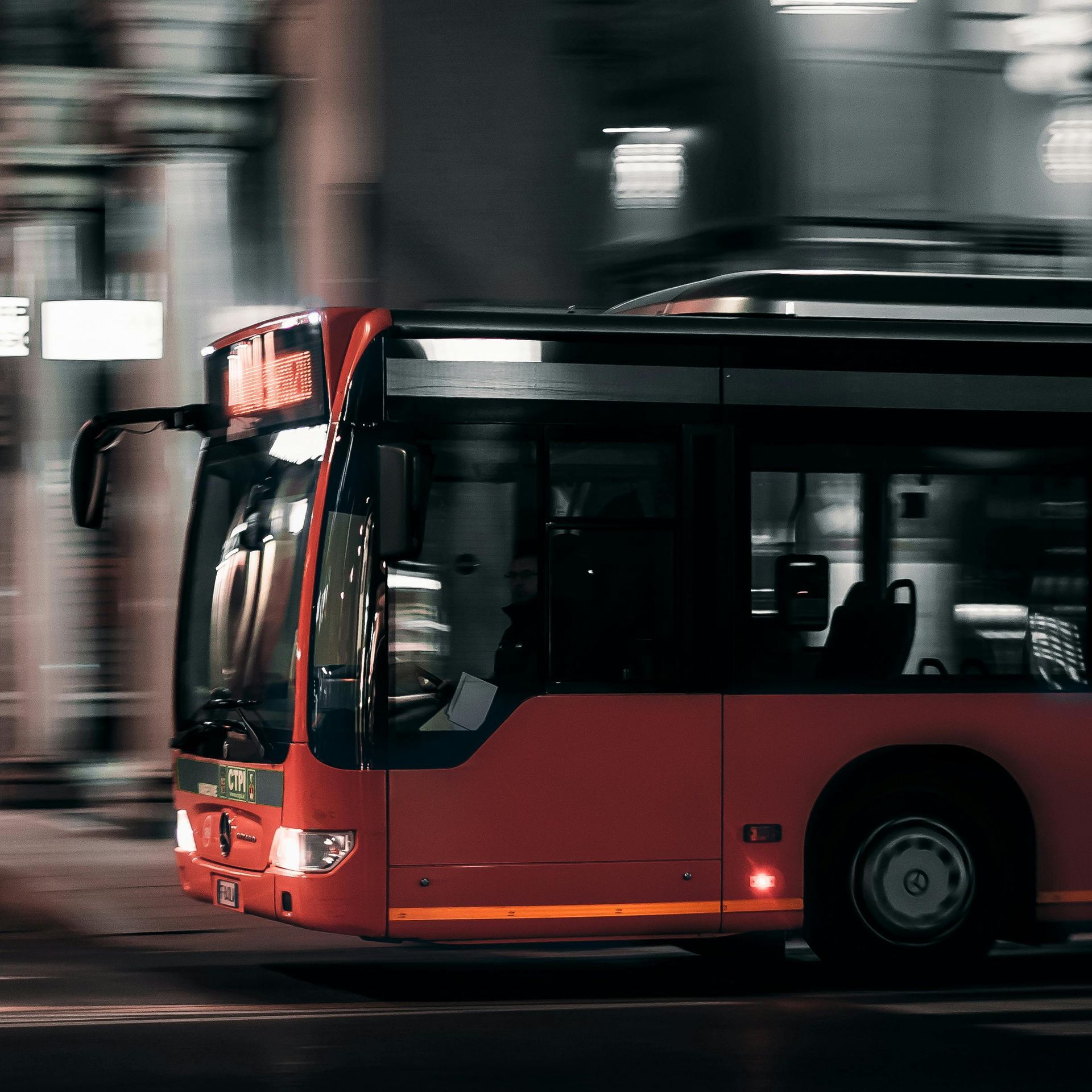
City and county transit agencies deploy stop-level and transit center RTPI displays as the most visible rider-facing investment in service quality. Real-time arrival displays at high-ridership stops, downtown transit centers, and equity-priority corridors signal modernization to riders, councils, and funding authorities.
City buses
regional authorities
county services
Multi-jurisdictional transit

Campus transportation departments deploy RTPI displays at student unions, residence halls, parking structures, and academic building lobbies - anywhere students wait for the next shuttle. The displays reduce class-time anxiety, support recruiting and parent visits, and signal campus operational quality.
Intercampus connectors
Parking shuttles
Campus circulators
Student housing shuttles

Airport authorities and ground transportation operators deploy RTPI displays at rental car centers, parking lot stops, employee transport pickup points, and terminal curbside locations. Travelers under flight-time pressure get clear, accurate information about the next shuttle - reducing curbside confusion and missed connections.
Rental car shuttles
Airport ground transport
Employee transport

Health systems deploy RTPI displays in main lobbies, parking structures, clinical entrances, and shift-change waiting areas. Patients, visitors, and staff see real-time shuttle information without standing outside or wondering whether the shuttle has already come - supporting patient experience scores and operational reliability.
Multi-campus shuttles
Patient Transport
Shift-change Routes
Medical center parking
Live data from your CAD/AVL
Predictions on displays match the rider app, AVAS, and dispatch console. One platform, one source of truth.
ADA visual announcement support
On-board displays pair with AVAS for synchronized audible and visual stop announcements that meet ADA Section 37.167(c).
Hardware flexibility
LED, LCD, indoor, outdoor, weather-rated, solar, AC - match the right display to every location.
Service alerts you control
Push detour and service messages to specific displays, routes, or the entire network from one platform.
Reduces printed schedule overhead
RTPI displays update automatically from CAD/AVL - eliminating the printed schedule lifecycle at covered stops.
Centralized health monitoring
Every display reports status back to the platform. Failures surface immediately in dispatch, not after rider complaints.
Technical Specifications
Enterprise-grade technology for passenger information displays
Peak Transit's RTPI platform meets the technical, accessibility, and procurement standards fixed route transit agencies operate under.
Real-Time
Live data performance
- Arrival predictions refresh continuously from Peak Transit CAD/AVL
- Service alerts push to displays in seconds
- Display content sync monitored centrally
- Sub-second response to dispatcher-pushed updates
ADA
Accessibility compliance
- Supports ADA Section 37.167(c) visual stop announcements on-board
- Sunlight-readable brightness on outdoor displays
- High-contrast text for visual accessibility
- Multi-language display capability
- Synchronized with Peak Transit AVAS for audible + visual announcements
IP-Rated
Compatible with transit-grade hardware
- Runs on transit-grade LED and LCD displays rated for outdoor and on-board environments
- Compatible with AC-powered and solar-powered stop displays
- Connects via cellular or Wi-Fi depending on site configuration
- Works with sunlight-readable and weather-rated enclosures from qualified hardware suppliers
- Hardware selection and site power planning handled during implementation
SOC2
Security &Compliance
- SOC 2 Type II certified platform
- Encrypted data transmission between displays and cloud
- Role-based admin access for display content management
- Centralized health monitoring and alerting
- Regular security audits and updates
Implementation
Fast Deployment, Comprehensive Support
Most agencies deploy their first RTPI displays within weeks of installation start - often phased by location, route, or facility as part of a unified Peak Transit rollout.
Average 4 Weeks
Week 1-2: Site survey & configure
Site survey at each display location, power and connectivity planning, display configuration in the Peak Transit platform, and content layout setup.
Week 3-4: Install & validate
Display installation, power and network connection, content validation, and integration with your existing Peak Transit CAD/AVL and AVAS systems.
Ongoing support included
Dedicated account manager, 24/7 technical support for critical issues, centralized display health monitoring, content updates for service changes, and continuous platform improvements at no additional cost.
Comparison
Why Transit agencies choose Peak Transit RTPI displays
Fixed route agencies have three real options for stop-level and on-board passenger information. Here's how they compare.
Peak Transit RTPI Displays
✓ Purpose-built for fixed route transit - predictions tied directly to your CAD/AVL.
✓
One platform across all rider channels - displays, rider app, AVAS, and dispatch all show the same data.
✓
Hardware flexible - LED, LCD, indoor, outdoor, solar, AC.
✓
ADA visual announcement support - paired with AVAS for audible + visual compliance.
✓
Centralized health monitoring - failures surface in dispatch immediately.
✓
Service alerts pushed directly - to specific displays,routes, or the entire network.
✓
Built for transit environments - weather-rated, sunlight-readable, multi-language.
Printed Schedules and Static Signs
✗ Out of date the moment service changes - no real-time information at all.
✗
Physical labor to update - every schedule change is a field operation.
✗
No service alert capability - riders learn about detours from social media or not at all.
✗
No ADA visual announcement support on board.
✗
Looks dated - undermines public perception of agency modernization.
Generic Digital Signage Vendors
✗ Built for advertising and corporate communications - not transit operations.
✗
No native CAD/AVL integration - requires custom integration work.
✗
No transit-specific data model - routes, stops, and predictions are bolted on.
✗
Separate platform from your dispatch and rider app - mismatched information.
✗
Hardware not built for transit environments - indoor commercial displays in outdoor transit conditions.
FAQ
Common questions about real-time passenger information displays
What is a real-time passenger information display?
A real-time passenger information display - often called RTPI or RTPIS in transit - is a digital sign that shows fixed route transit riders live arrival predictions, route information, and service alerts. Displays are deployed at transit stops, inside transit centers, on-board vehicles, and at major destinations. They update continuously based on actual vehicle position from the agency's CAD/AVL system.
Is this the same as digital signage or digital advertising?
No. Generic "digital signage" usually refers to advertising, menu boards, or corporate communications displays. Peak Transit's RTPI displays exist exclusively to show transit rider information - arrival times, routes, stops, and service alerts. They're owned and operated by the transit agency, fed by the agency's CAD/AVL system, and dedicated entirely to passenger information.
Where are RTPI displays typically installed?
Four primary locations: at bus stops and shelters (single-route or multi-route arrival signs), inside transit centers and transfer stations (multi-route arrival boards), on-board vehicles (interior next-stop displays), and at major destinations like hospital lobbies, university buildings, parking structures, and rental car centers.
How accurate are the arrival predictions on the display?
Predictions come directly from the Peak Transit CAD/AVL prediction engine, which factors in current vehicle GPS position, route progress, schedule, dwell time, and live conditions. The same predictions feed the dispatch console, the branded rider app, the AVAS announcements, and the displays - so accuracy is consistent across every channel your riders use.
Can the displays show service alerts and detour notices?
Yes. Dispatchers and authorized staff can push service alerts to specific displays, route-specific displays, location groups, or the entire network from inside the Peak Transit platform. Alerts can be prioritized so emergency information overrides normal arrival content.
Do on-board displays support ADA requirements?
Yes. On-board RTPI displays, when paired with Peak Transit's Automatic Voice Announcement System, deliver synchronized audible and visual stop announcements that support ADA Section 37.167(c) requirements for vehicles with destination signs.
Can the displays show multiple routes at one location?
Yes. Multi-route arrival boards are designed for stops, transit centers, and transfer stations where several routes converge. The display lists each upcoming arrival in order, with route name, headsign, and minutes-to-arrival.
Do the displays integrate with our existing CAD/AVL system?
Peak Transit RTPI displays integrate natively with Peak Transit CAD/AVL - no separate integration required. If your agency uses a different CAD/AVL system, talk to us about feed-based integration via GTFS-Realtime and other standards.
How are service changes reflected on the displays?
Route changes, new stops, schedule adjustments, and detours updated in your CAD/AVL system propagate automatically to the displays. There's no separate display management workflow - update once, push everywhere.
Can we customize what the displays look like?
Yes. Display layouts, fonts, color schemes, agency branding, and information density are configurable. Agencies typically standardize layouts across the fleet and across stop categories (urban shelter, transit center, on-board, lobby) for a consistent rider experience.
How are display failures detected?
Every display reports health status - online state, content sync, power, and signal strength - back to the Peak Transit platform continuously. Failures surface in the dispatch console as alerts so maintenance is dispatched before the issue becomes a rider complaint.
How long does RTPI deployment take?
Most agencies have their first displays in revenue service within 4 weeks of installation start, with phased rollouts across stops, transit centers, and on-board vehicles continuing as procurement and site work allows. Deployment timelines depend more on site work - power, mounting, network - than on Peak Transit configuration.
Do RTPI displays replace printed schedules at the stop?
At covered stops, yes - RTPI displays eliminate the need for printed schedules and the labor required to keep them current. Agencies typically retain printed schedules at uncovered stops and as a fallback for riders who prefer them.
Is the display data secure?
Yes. Peak Transit operates on a SOC 2 Type II certified platform with encrypted data transmission between displays and the cloud, role-based admin access, and full audit logs of content changes. Regular security audits and updates are included.
Get Started
Ready to put real-time arrival information where your riders are waiting?
See how Peak Transit's real-time passenger information displays show live arrival times, route information, and service alerts at stops, in stations, and on-board vehicles - powered by the same CAD/AVL platform running your fixed route operation.